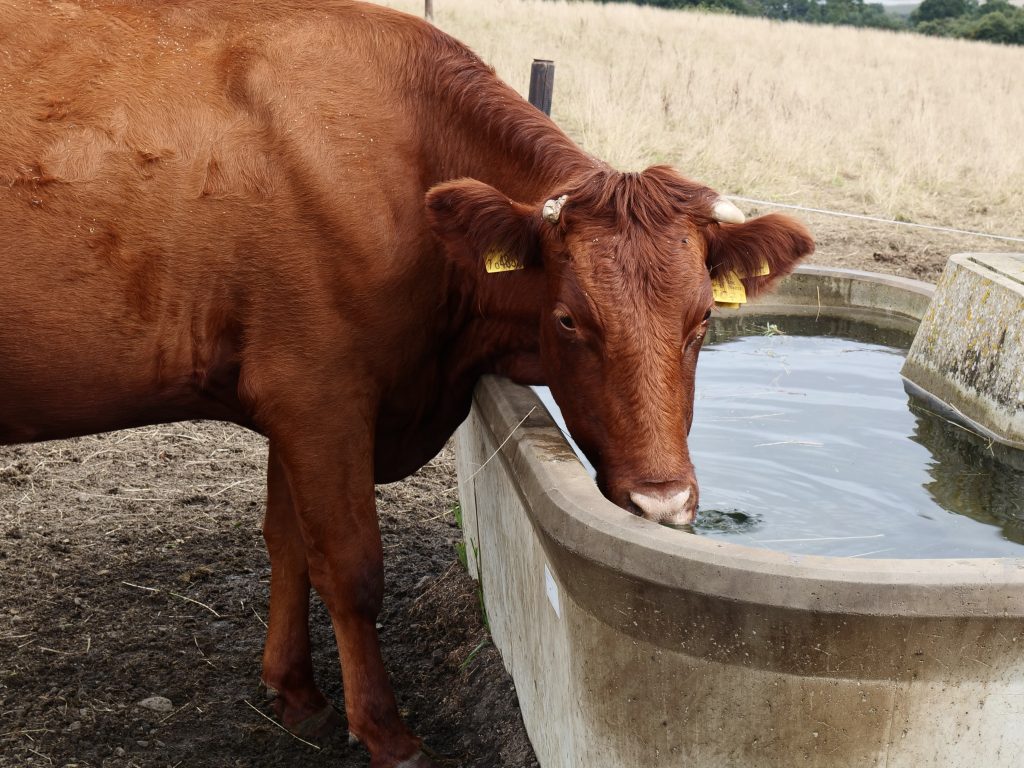
Meet Laura, Balbirnie Home Farms
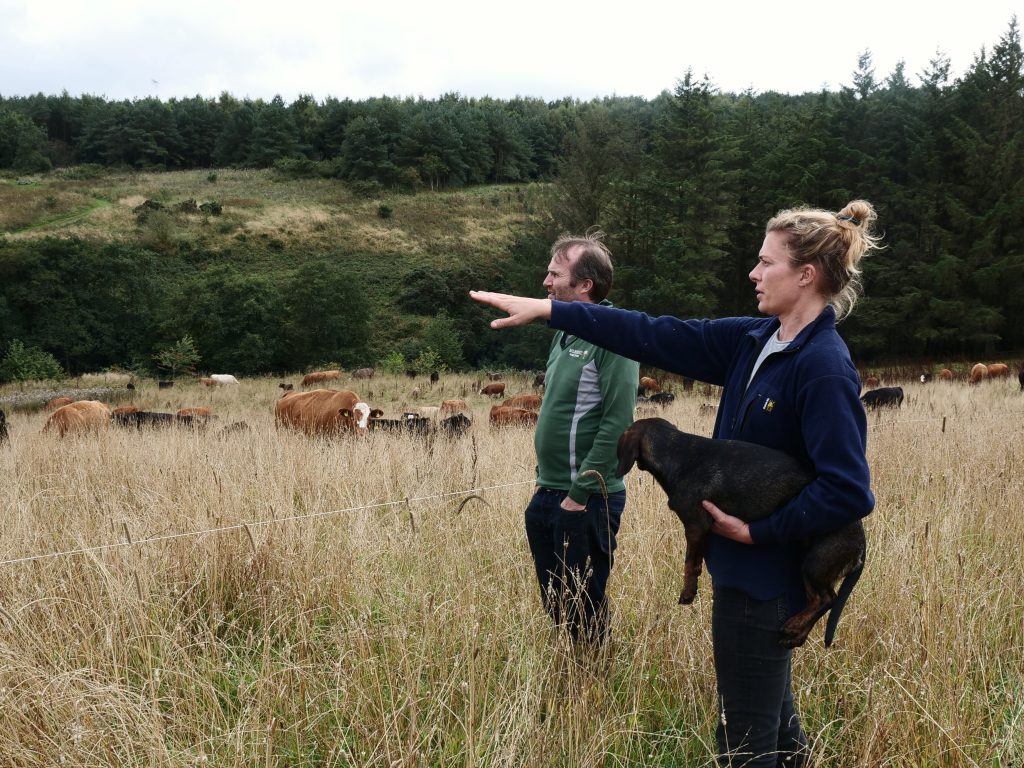
Stand at the top of Balbirnie Home Farms and the view stretches out in front of you. The Forth Estuary lies in the near distance, with the Pentlands, Edinburgh, the Lammermuirs and Bass Rock along the horizon.
The high ground is where Laura, the livestock manager, likes to be:
“You just get a real sense of how vast it is,” she says. “Most of the time when I’m there, it’s because cows are there, and you just get a cool view.”
The farm sits on the edge of Glenrothes, and if you have ever walked or driven in this area, there is a good chance you have already passed through it. Public footpaths and roads cut across the land, including the main route between Dunfermline and Dundee. Johnnie Balfour, who owns the farm, knows the feeling well:
“There are bits of the farm that you can go and stand on, and you do feel like you’re in the middle of nowhere, but you never are. You are never more than probably a 100 metres from a public road, because the whole place is crisscrossed by roads”
What Regenerative Farming Looks Like
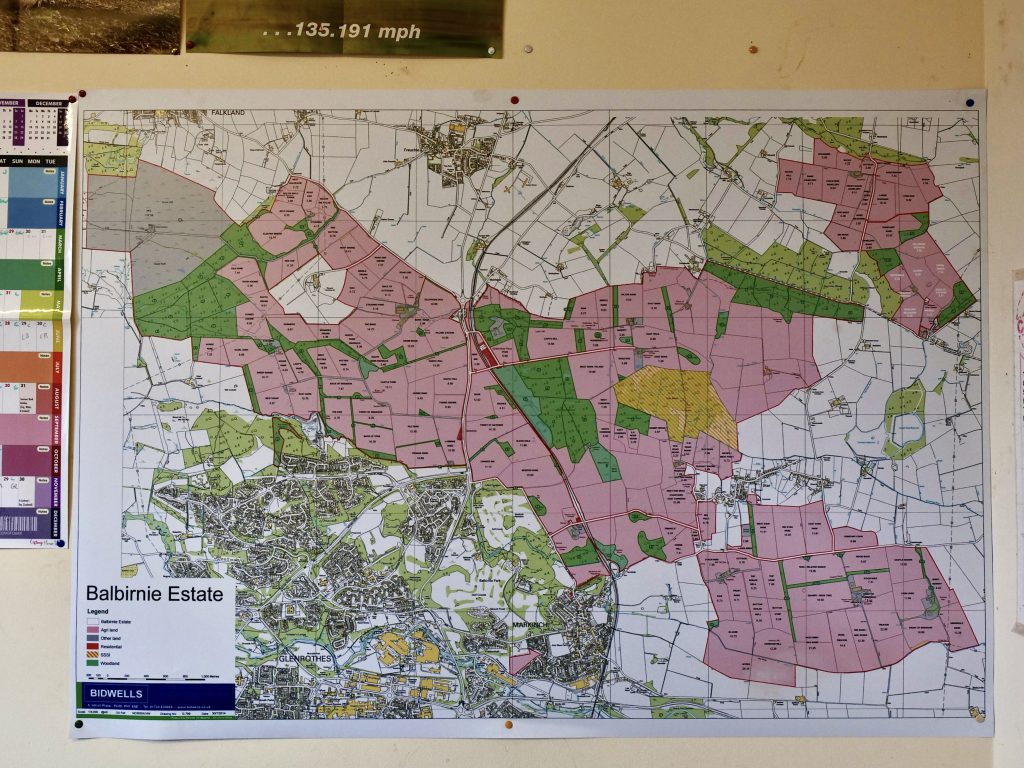
Balbirnie Home Farms is a lowland farm rising from 50 to 350 metres above sea level and has been in the Balfour stewardship since 1642. It has a bit of everything: forestry, hedges, a large Site of Special Scientific Interest (SSSI) bog, arable fields and pasture fields for the cattle. The food from these fields reaches people in many ways. The oats go to Quaker and may have been part of your morning porridge. The carrots go to a nearby vegetable processor. Other farmers rent fields here to grow cauliflower, broccoli and potatoes. Then there is the beef. Some of it goes to supermarkets, but some can be bought directly by anyone, with lots of different cuts available as well as boxes with a bit of everything in it.
“I’m quite proud of the fact that most of what we produce becomes human food rather than just feed.” – Johnnie
At the centre of what is done at Balbirnie Home Farms is to farm regeneratively and holistically. It shapes how the land is managed and the work culture, and it is a big part of why Laura does what she does. But what does this type of farming actually look like? If you ever have the chance to walk through the farm, what are some of the ways in which you can see it?
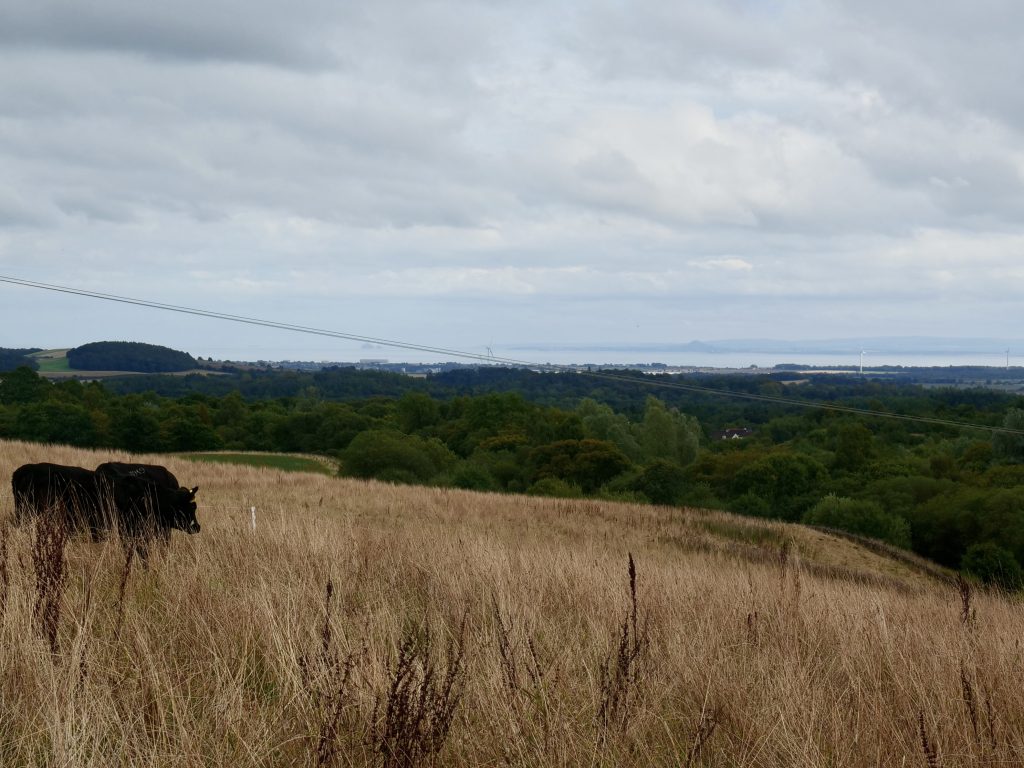
The first sign is that you might struggle to find the cows. Laura uses a practice called mob grazing, where the cattle are kept together in a small area of a field rather than spread across the whole of it, and are moved to a fresh patch every day. At any one time, the cows are on around 2 hectares of the farm’s 400.
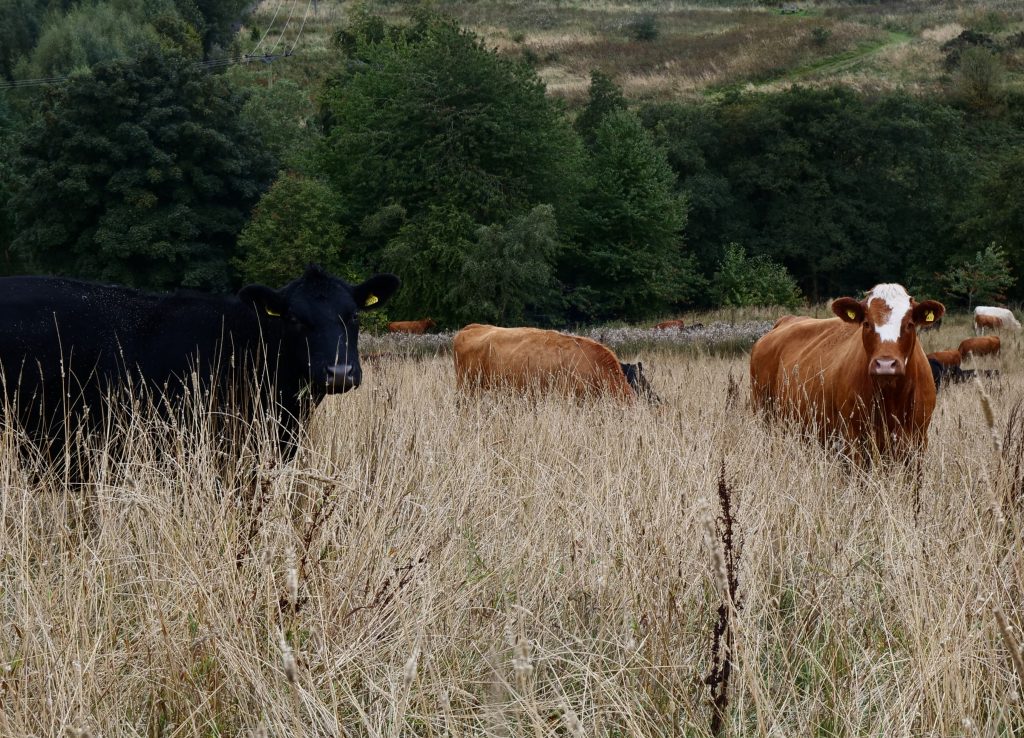
The second sign is the pasture. It is pasture rather than simply grass, because grass is not the only thing growing there. Clover, trefoil, plantain and many other plants fill the fields. And then there is the height. Because each patch is left to rest for a long time after the cows move on, the plants grow very tall.
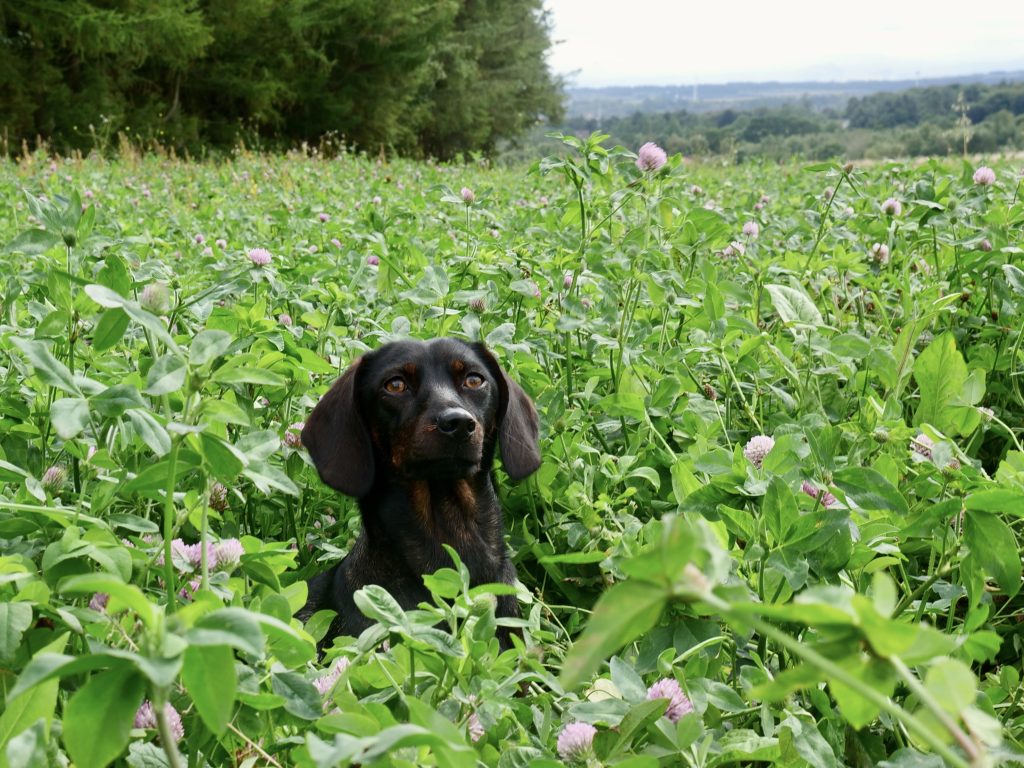
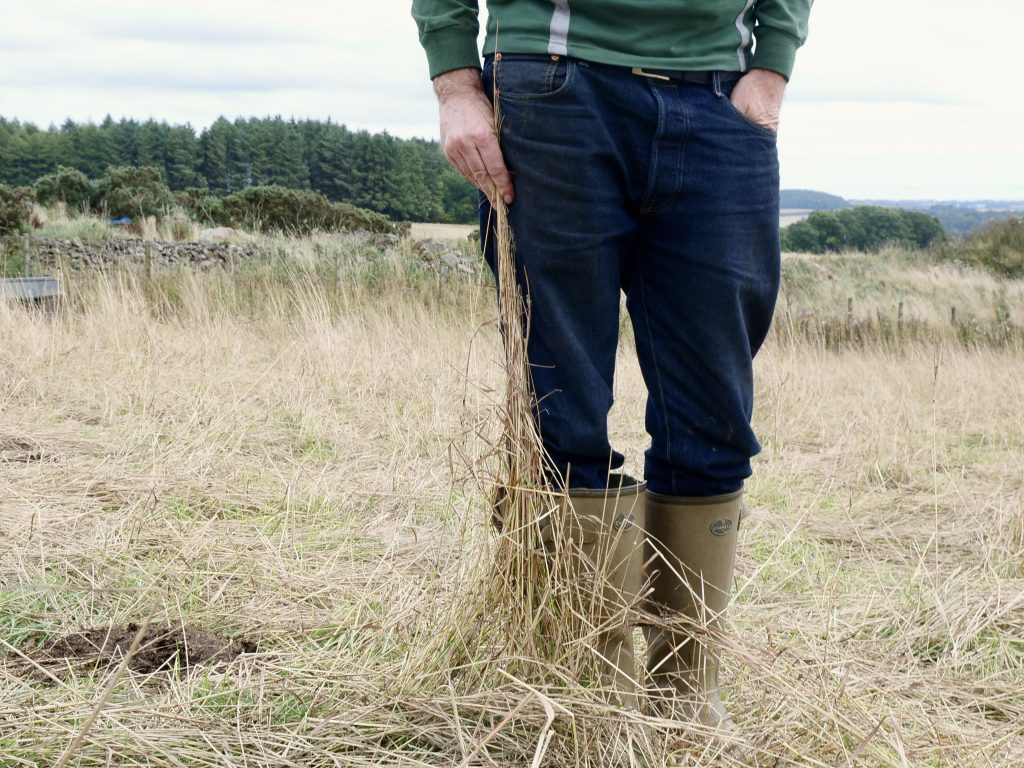
Both of these signs, the moving cattle and the tall, mixed pasture, come from the same regenerative and holistic thinking. Regenerative means leaving the land in better shape each year by working with natural processes instead of against them. Holistic means looking at the whole picture rather than one part of it. At Balbirnie Home Farms, decisions are made by weighing up what is best for both people, the planet and the farm’s finances. Balbirnie Home Farms began moving towards this way of farming ten years ago. The farm now sells a little less than before, but it makes better use of what it already has: the rain, the sunshine and the nutrients in the soil.
This way of farming is not just about the land, it is also about the people who work it. As Laura puts it:
“It’s like a cultural change in how we work here. As an employer, you’re pretty dead set on everyone having a life. It’s not a badge of honour to work every hour going, which is quite a farming trait. It’s very much about everyone having a quality of life at home as well as at work.”
What Laura Loves About It
The satisfaction and joy that Laura gets from this kind of farming came through in how she spoke about why she likes farming. Laura said:
“It’s when you hit the sweet spot of everything, and it’s not always everything at the same time. But the cattle are growing, the grass looks good, the soil’s nice, everything’s right. You’re walking through the fields and you’re seeing so much wildlife, nature just absolutely going for it, and your cows are growing. You genuinely can’t beat it. That’s the main thing that keeps me super motivated about the way we’re farming.”
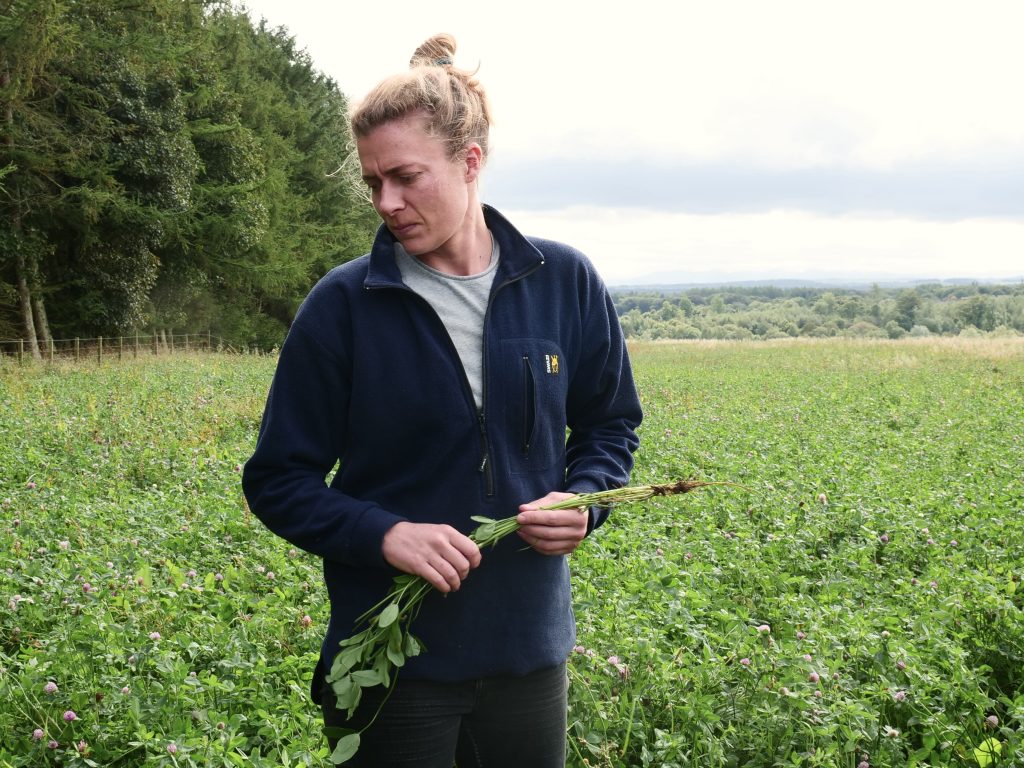
Laura studied agriculture in Newcastle and worked on a number of commercial farms before she found this way of farming. It began with conservation grazing for the RSPB near Peterborough, where she was surrounded by people who were passionate about nature and wildlife, and she got the bug. A trip to Groundswell, the largest regenerative farming festival in Europe, held near Stevenage, showed her that this approach could work not only on nature reserves but on commercial farms too. With a keen interest in the outdoors and the countryside, the transition felt very natural.
“I was like mad keen on farm sets and stuff as a kid, but I never thought, I really want to like work in a farm until someone one day suggested that I should study agriculture. Back then, I actually didn’t realise you could study agriculture” – Laura
Beef From Down the Road
Some of the hopes for the future of Balbirnie Home Farms mirror what already characterises it: the close connection to the town and the many people passing through. Laura wants Balbirnie Beef to stay local, feeding people in the area with beef that is good for the people eating it, for the environment and for the people producing it. She would like the community to feel proud and connected to the farm. That is why they are building up the beef boxes and the range of cuts available locally through their webshop. As she says:
“I see people out walking their dogs and I want them to be able to say, yeah, I know where those cows are from. I know where my burger or steak comes from, because I walk past them with the dog. I’m 100% sure that people in St Andrews and Elie are proud that Balgove and Ardross feed lots of people and do it really well. I want people in Glenrothes to feel as proud as people in St Andrews do about Balgove, or people in Elie do about Ardross.”
Interested to learn more about them or buy their beef? Click on the button below.