
By Fay Young, Pond Cottage
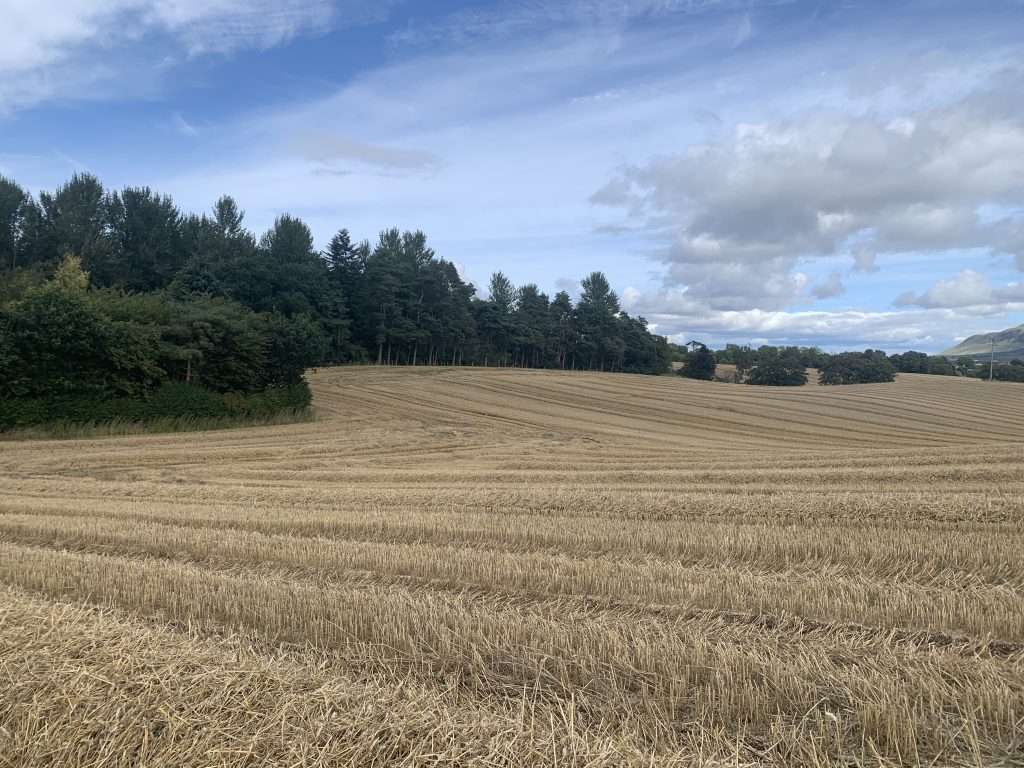
The road to Pond Cottage rises through comfortably rolling farmland as it has done for more than 200 years. It’s odd to think, despite the turmoil of the wider world, this view must look pretty much as it did to travellers going north in the 18th Century.
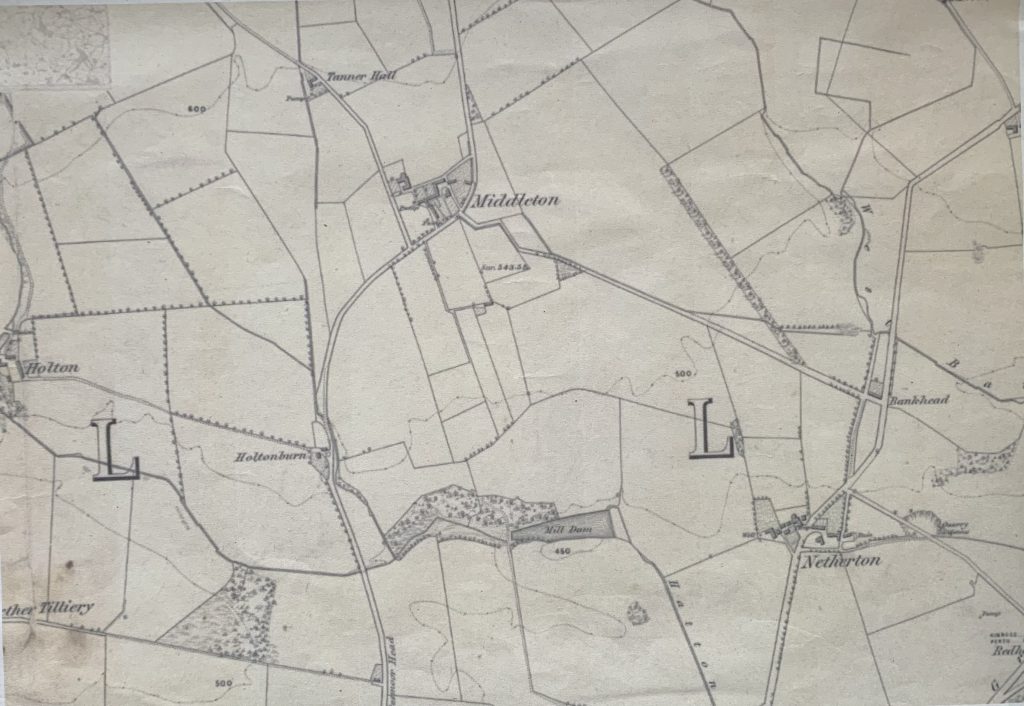
Old maps show the road cutting through a familiar layout of rectangular fields outlined by burns, tracks, and – intriguingly – on the 19th Century Ordnance Survey map clear signs of hedges and trees in those (hand drawn?) squiggly symbols.
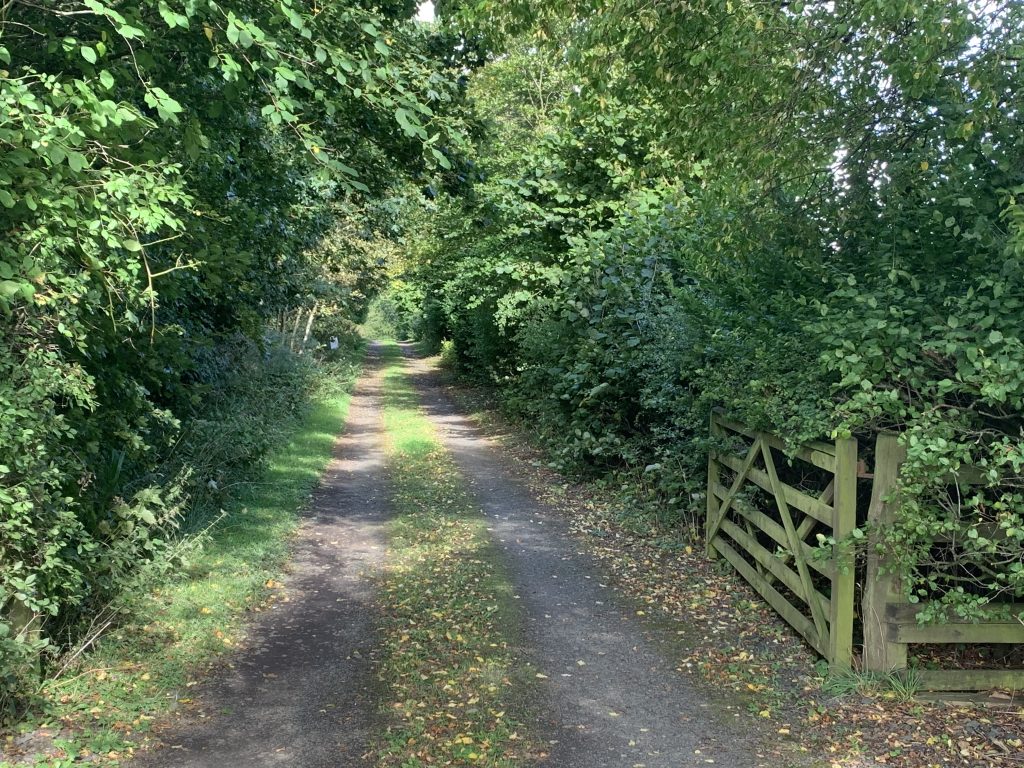
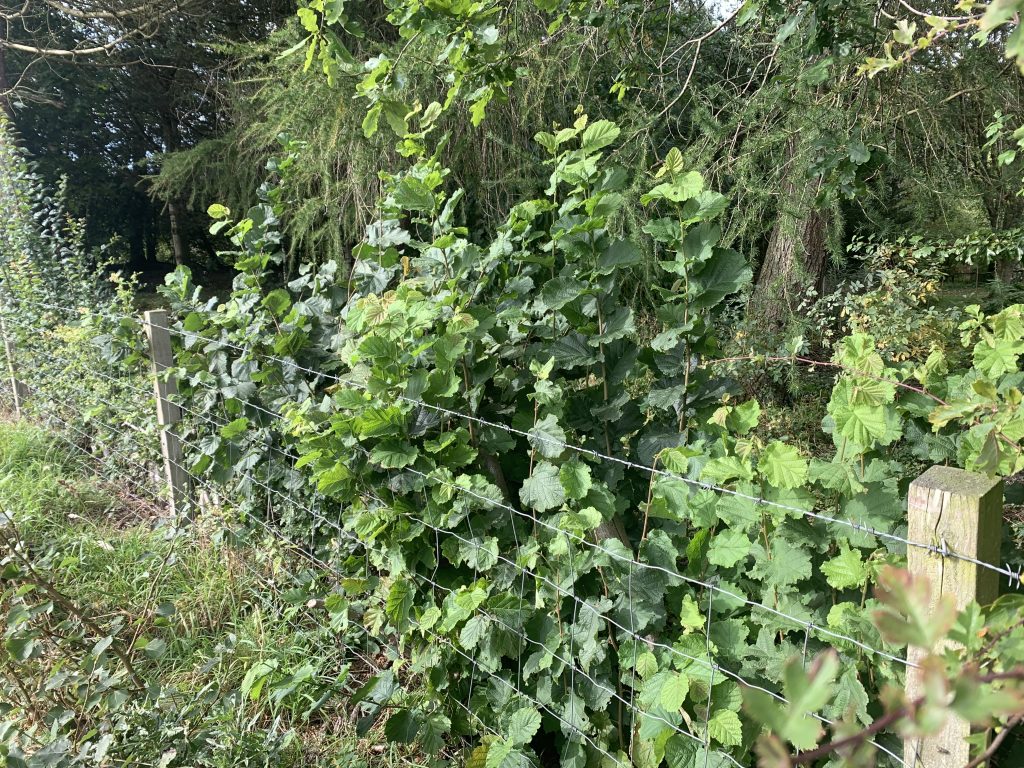
In real life as the road dips downhill there’s a new green line running east to west that you won’t find on the old maps. Starting with a blackthorn tree at the gateway, our long hedgerow is a distinctive landmark in a landscape where most of the old walls and hedges have been grubbed out.
What is it doing here?
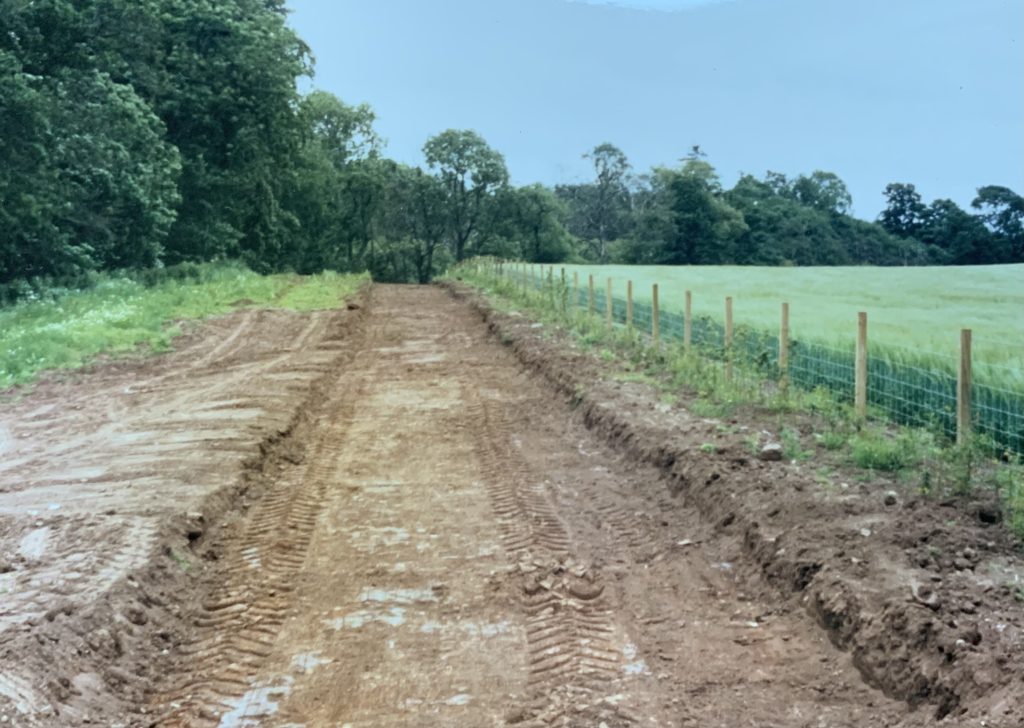
The quick answer is that Ray and I struck lucky when we bought our patch of woodland a little more than thirty years ago. Terms of sale required us to mark our new boundary with a stockproof fence. It seemed a good idea to add a living touch of green and by great good fortune we qualified for a generous grant provided under the former Tayside Regional Council tree-planting scheme.
A trawl through old invoices, receipts and letters turns up an engaging note from Eamonn Wall, woodland design consultant, who cheerfully managed the planting and grant application process. “Not bad, I’d say,” he scrawled on a letter from a friendly rural affairs assistant in Perth confirming we would be entitled to £1,300; 65% of the total cost of planting 300 metres of holly, hawthorn, blackthorn, briar rose and hazel. Plus, stockproof fencing. By another stroke of good luck 1994 was probably a myxomatosis year because the young plants took off like a rocket in the fertile soil of an ancient field margin. (The holly mostly disappeared when rabbits returned a year later.)
“They were golden years, the early 90s,” says Dallas Seawright, a conservation manager who also runs courses in hedgelaying. Think of it, Scottish Natural Heritage (as it was then called) was established in 1991 with a mission to ‘secure conservation and enhancement of nature and landscapes’. The Environment Act 1995 provided for National Parks and laid the ground for Hedgerows Regulations 1997 (prohibiting removal of most countryside hedges). Perhaps best of all, local authorities had funding to support landowners with an interest in nature, landscapes and hedgerows.
Climate change was not a mainstream concern but there was growing awareness of threats to environment – and what we might do about it. At that time, I was working as a freelance writer with the Royal Botanic Garden Edinburgh. Already interested in climate change and conservation (the 1970s sowed seeds of self-sufficiency in people of a certain age) I was privileged to meet and write about inspiring botanists and horticulturists who could explain the meaning of biodiversity. And how plants support all life.
As new owners of a woodland surrounded by farmland, we also benefited from enthusiastic support of the local FWAG (Farming and Wildlife Advisory Group) adviser. Long before anyone talked about rewilding, Sarah Warrener’s management plan for Pond Cottage included wildflower meadows and a mixed native species hedge, ‘a corridor for wildlife.’
Management matters
The hedge thrived. It blossoms in spring and makes berries in autumn. Bees buzz in it. Blackbirds nest in it. Bats flitter around it. Buzzards wheel high above it, and red squirrels chase each other through it. In short, it behaves like a busy green corridor connected to woodland at either end, supporting a lot of life, resisting winter gales and perhaps reducing the steady erosion of farmland topsoil into our streams.
But nothing stays still. Hedges want to grow into trees and keeping them trim to stop that happening can create its own problems. “The main threat to hedgerows is their condition deteriorating through over-trimming,” warns Nature Scot (previously Scottish Natural Heritage) in its hedgerow guidance.
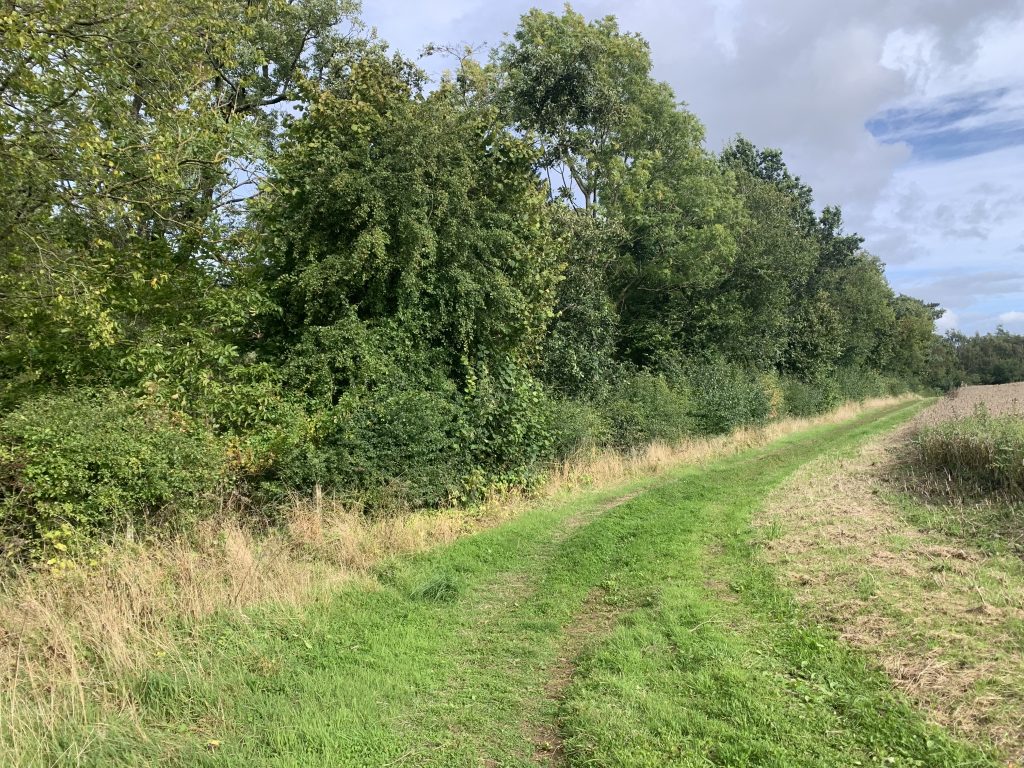
For perhaps twenty years we managed to avoid ‘over-trimming.’ There was a reliable rhythm to the seasons: cold winters brought snow, spring arrived March/April, leaves fell in September/October and then the hedge went to sleep. In 1995 Eamonn’s team trimmed young growth carefully with secateurs. As the hedge widened, the neighbouring farmer began to flail his side of it, but Ray was still able to cut healthy growth on our side by hand. But climate change brings wetter, warmer weather accelerating growth almost twelve months of the year. It’s hard to keep up.
From about five years ago we resorted to flailing with a local contractor who does an unusually sensitive job. Nevertheless, our hedge shows signs of ‘over-management.’ There are widening gaps between stems and each year’s cut produces knobbly knuckles making it harder for birds to nest – though they still find food.
Thank you, Jeremy?
The ancient skill of hedgelaying is the recommended best practice for restoring healthy growth. In fact, it’s not so ancient in Scotland but it’s catching on as farmers are encouraged to restore the hedges, they were funded to rip out just a few decades ago. Jeremy Clarkson turns out to be an unlikely ambassador since his Diddly Squat hedgelaying championship in 2022 set a trend in motion. No complaints from hedgelayers. “I’m very busy in Scotland, and I never used to be,” Angus-based Torquil Varty is happy to tell me.
We had a go perhaps ten years ago after attending a hedgelaying demonstration in Fife by Dallas Seawright. Dallas reckons a skilled worker could lay perhaps 30 metres in a day. Not such an easy job for the novice, we tried it just once and left the remaining 290 metres for another day.
So how can we keep our hedge in good shape? By another stroke of good luck, we have become part of the *Leven Catchment programme. Through Greener Kinross-shire we met Clara Schade-Poulsen of Forth Rivers Trust On a wild, wet day last winter she came to visit Pond Cottage in her role as senior project officer for Leven Catchment Collective where – broadly speaking – she encourages active collaboration between people with shared interest in the environment and livelihoods rooted in the land. Clara took a walk round our woodland, wetland and hedge and asked if we would be up for an experimental hedgelaying trial before the spring.
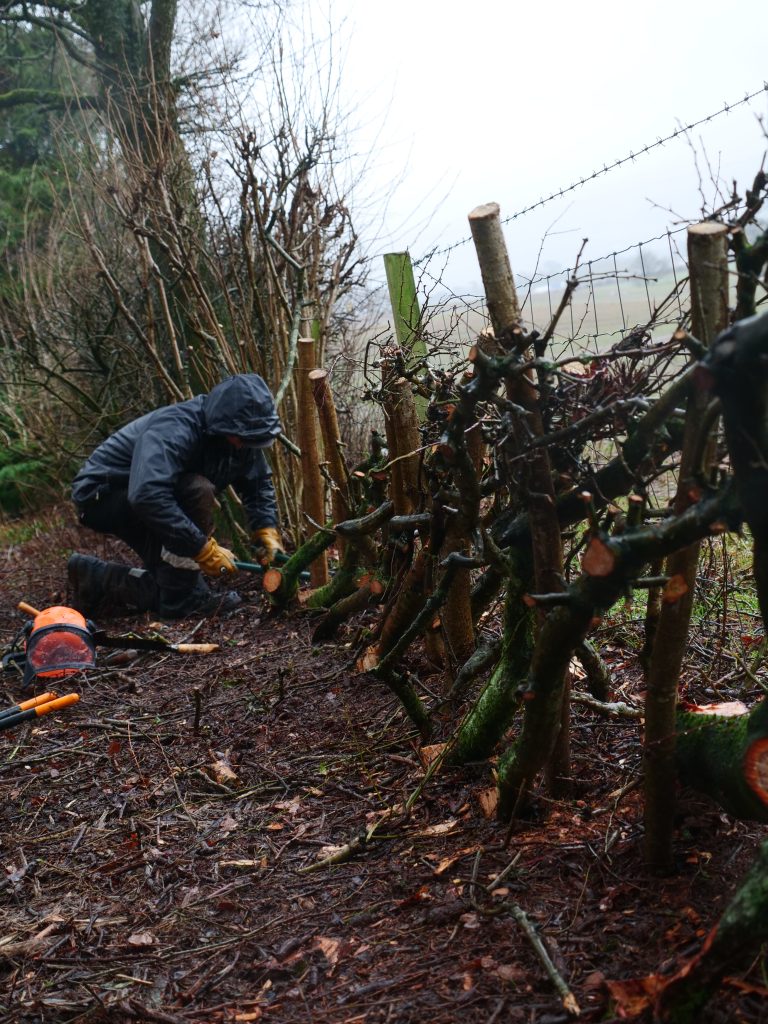
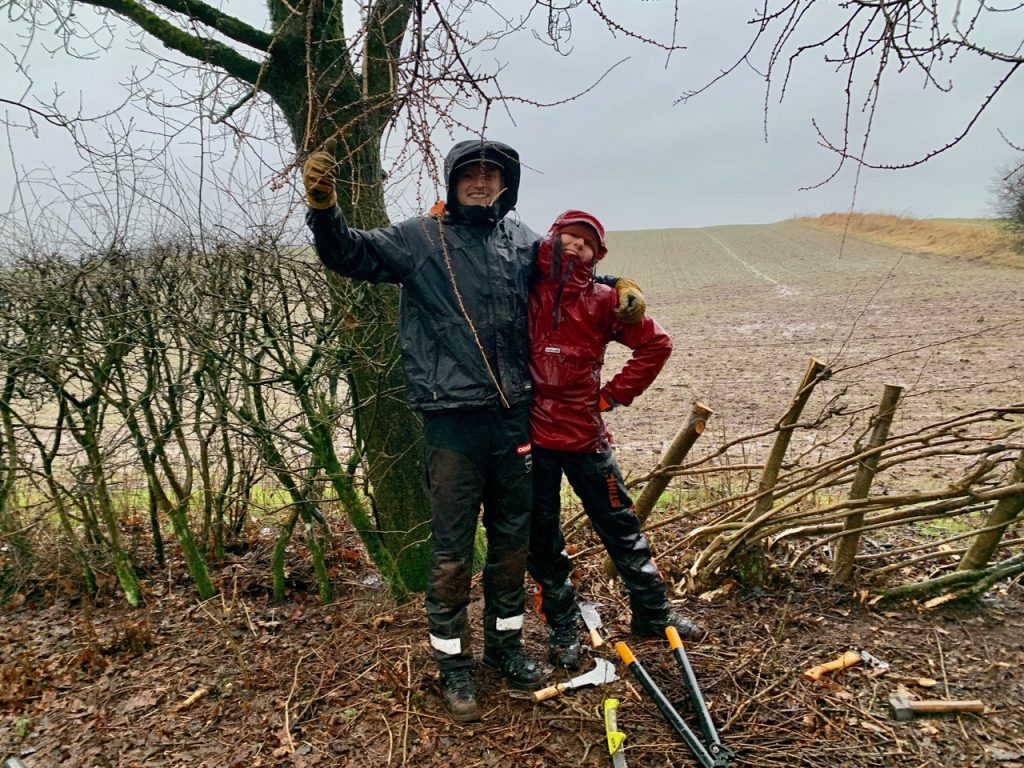
We didn’t hesitate. Which is why Clara returned with her colleague Magnus Clements on another wild, wet day in January this year. The forecast was not good, but Clara emailed, “We will bring all the necessary equipment for the hedgelaying and coppicing for stakes (billhooks, axe, chainsaw etc.)”
Storm Chandra tried hard to stop them, but Clara and Magnus laid 20m of prickly blackthorn, hawthorn and smooth hazel, “We were so grateful when we got to the hazel,” said Magnus warming his hands on a well-deserved cup of tea.
That was nine months ago. In the early spring, as Clara and Magnus took care to warn us, the newly laid hedge looked unloved and unpromising. But – despite some attention from the rabbits – it wasn’t long before the first new growth appeared from the ground up. By October, in another warm autumn, the diagonal stems were covered in bright green leaves.
For a follow-up meeting Magnus provided a management plan, starting with the good news that our hedge is in pretty good condition for its age, but acknowledging that the plan would take some digesting. Restoring a 300m hedge is not a quick fix. Options include a mix of coppicing and hedgelaying (bearing in mind there are many different styles), infilling gaps with new plants and leaving three to five years between each cut. Flailing, if we must, should cut at least 10cm higher and wider each year to develop good habitat.
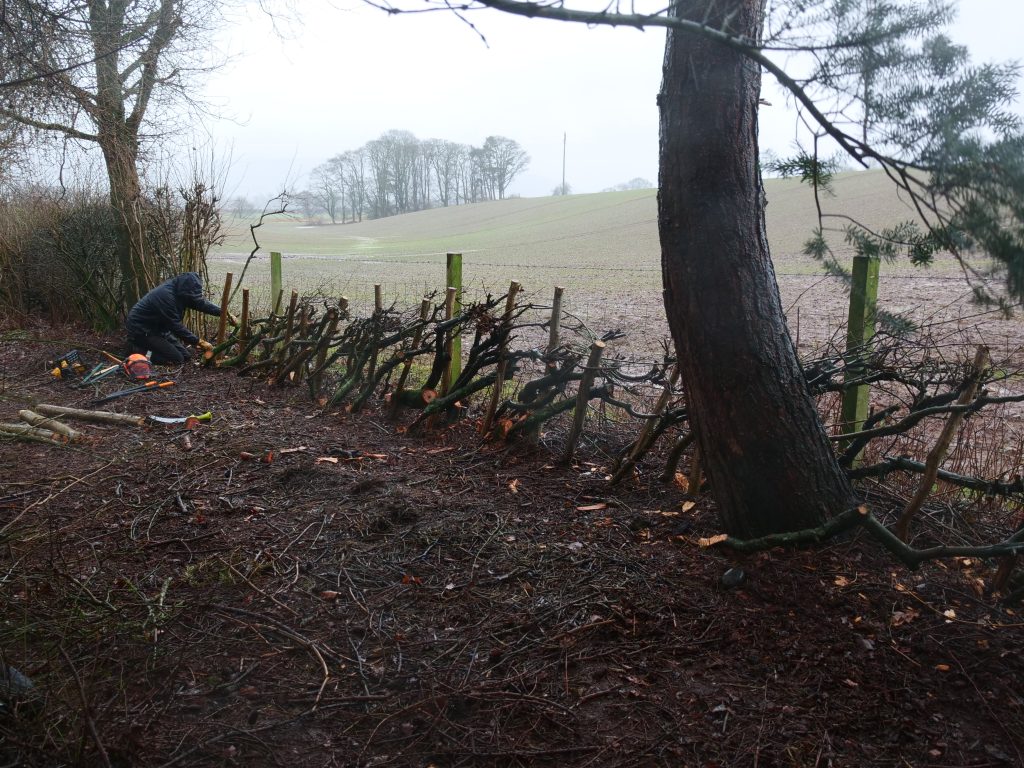
A well-laid hedge is a thing of beauty as well as a thriving habitat. We would like both. Grant funding is not so easy to come by, and we do not know if we will qualify. If not, Ray suggests, we should start saving. Call it a hedge fund.
Meanwhile, it would be good to work with local farmers in the catchment exploring potential for new planting. Who knows. We might see those squiggly lines of old hedgerows reappearing on the road to Pond Cottage.
To learn more the Pond Cottage, visit Fay Young’s webpage: https://fayyoung.org/pond-cottage-garden/
*The Leven Catchment Collective brings together farmers, land managers, and community groups to support a future where thriving ecosystems, community wellbeing, and resilient businesses go hand in hand. https://catchmentcollective.scot/