Artist in Residence: Think Like a Catchment
Before this residency, I had never really thought about a catchment.
I knew rivers as individual places. I knew landscapes through neighbourhoods, parks, coastlines and hills disconnected experiences perhaps. But a catchment asks us to think differently. It ignores the boundaries we create and instead follows the movement of water, connecting places that might otherwise seem entirely unrelated. It is a landscape defined not by ownership or postcode, but by flow.
As Artist in Residence with Forth Rivers Trust, I have been invited to explore two questions:
What does the Forth Catchment as a lived landscape mean to the people who live and work within it, whose daily lives are not defined by catchment boundaries?
How can we connect people with the catchment they live and work in, and with one another across the catchment? At what scale does this work best: within local sub-catchments, across the wider Forth Catchment, or both?
These first months have produced more questions than answers and given me a new way of looking.
Very quickly, I found myself returning to three recurring ideas: flow, scale and power.
Flow, not simply as the movement of water, but of people, stories, memories and care.
Scale, from the intimacy of a burn or pond to the complexity of an entire river system, and how our sense of belonging and relating shifts between those perspectives.
And power. Who owns land, who shapes access, who decides how nature should be experienced and whose relationships with the landscape are recognised and valued.
These ideas have become the lenses through which I am beginning to understand the catchment.
In the beginning…
My first day was spent travelling across the catchment with Clara, tracing the River Leven from its upper reaches towards the more densely populated urban landscape. What I had imagined would be an introduction to rivers quickly became an introduction to ways of seeing.
I learned about invasive species such as gorse, whose brilliant yellow flowers disguise the damage they can cause when growing along riverbanks. Unlike native species with deeper root systems, gorse does little to stabilise the soil, increasing erosion as water moves through the landscape.
As we travelled downstream, however, I became increasingly interested in something else.
The relationship between people and nature seemed to change. Higher up the catchment there was an undeniable sense of freedom. Gates, bridges and pathways were built from timber and stone, softened over time by mosses and lichens until
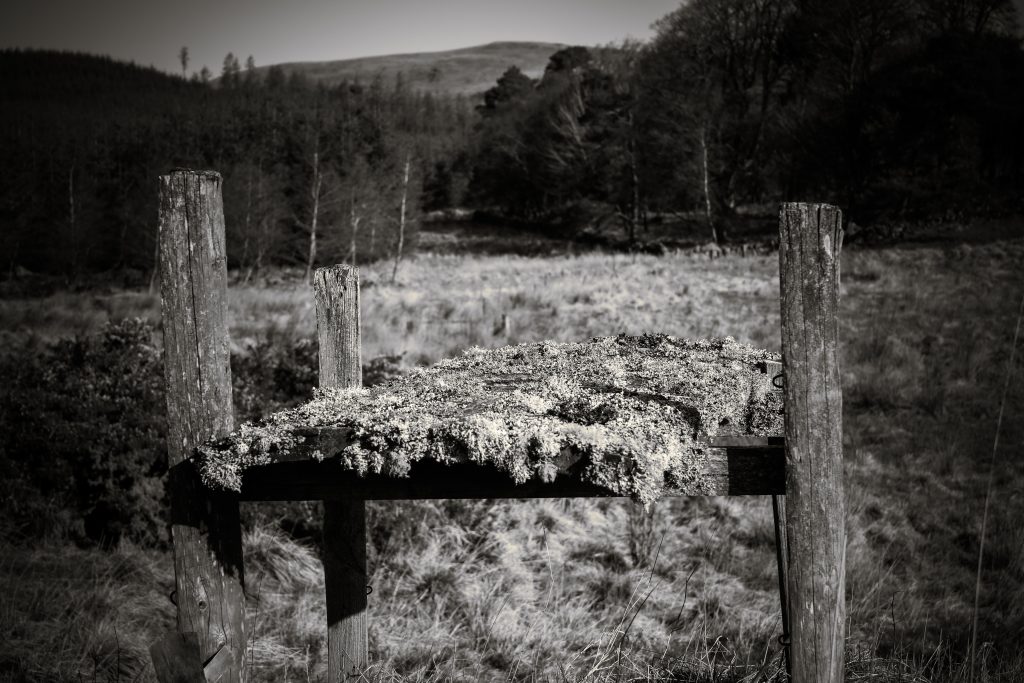
they appeared almost to belong to the landscape itself. There was a feeling that nature was something to move through rather than something to be managed.
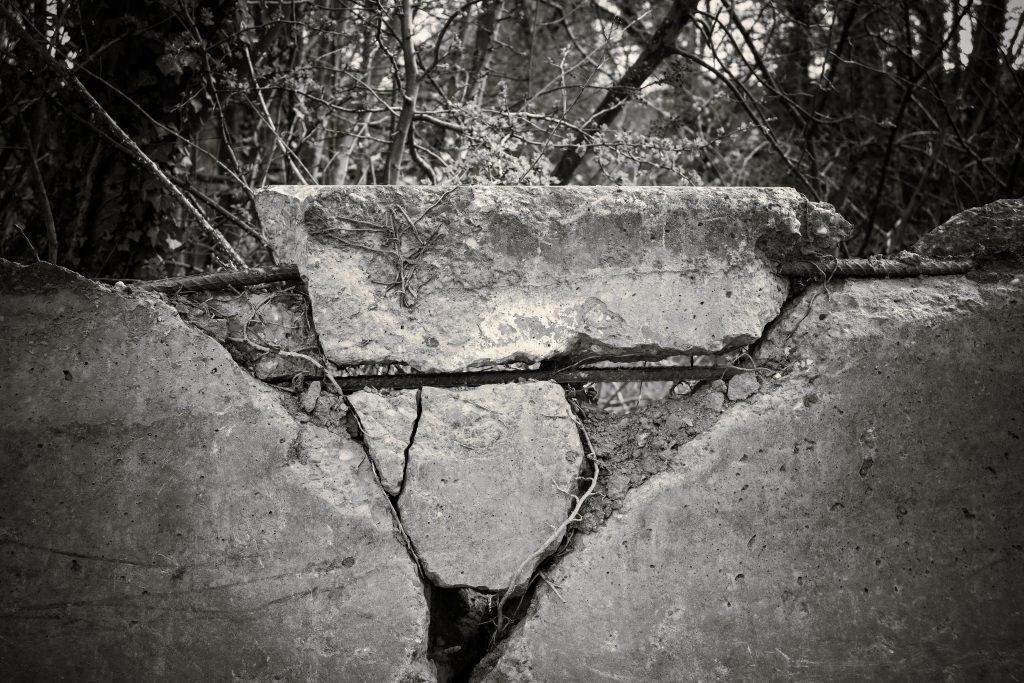
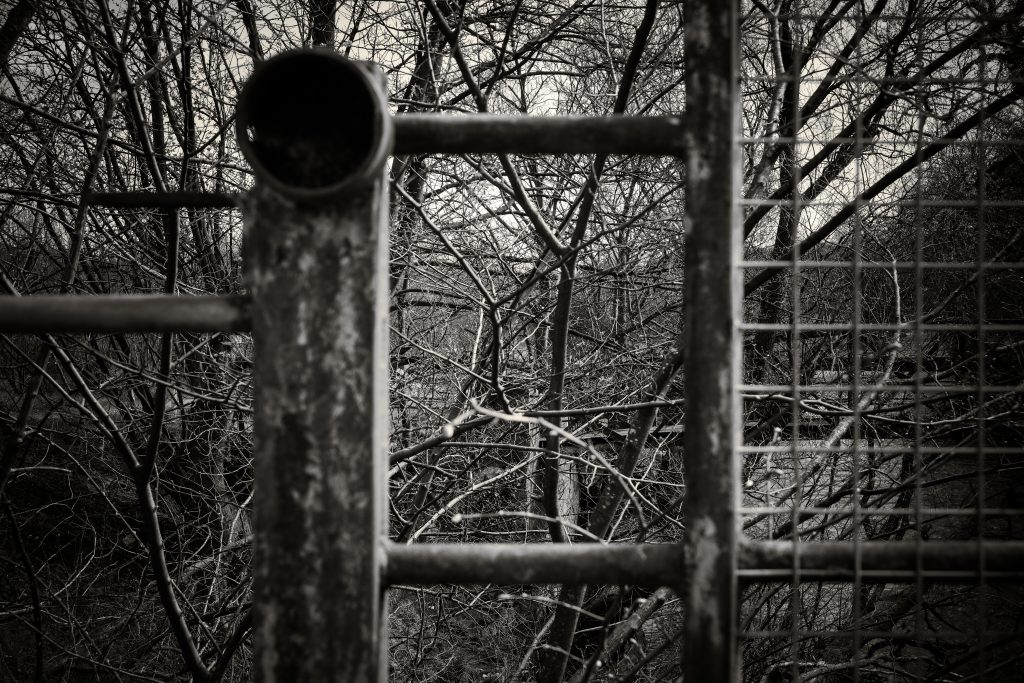
Further downstream the experience became increasingly curated. Concrete replaced timber. Steel replaced stone. Railings directed movement and pathways quietly prescribed where people could walk, pause and look. These interventions exist for good reasons, shaped by accessibility, health and safety and the realities of managing shared spaces. Yet they also influence how we come to understand nature itself.
I found myself wondering how much our experience of landscape is determined not by geography, but by design.
Who gets to wander?
Who learns that nature is somewhere to explore freely?
Who experiences it through carefully managed routes?
Without intending to, I began photographing these structures. Looking back, I realised I was documenting more than bridges and fences. I was collecting evidence of how human decisions frame our relationship with the natural world.
Landscapes, Power and Care
As I travelled through the catchment, I found myself thinking about the different ways landscapes invite us in, or keep us out.
Some places are defined by boundaries. Walls, fences and signs quietly communicate that this is land to be observed rather than entered. They raise questions that linger beyond the physical barrier. Who decides where people can go? Who shapes our experience of a landscape? Where does the power to influence a place sit, and how does that affect the people who live alongside it?
Those questions found a very different response at Pond Cottage.
Lovingly restored by Fay and Ray over three decades from an abandoned farmhouse and neglected land into a place of remarkable calm, Pond Cottage feels less like a project and more like a relationship. Every path, tree, pond edge and planting reflects years of careful attention. Nothing feels finished. Everything feels cared for in a continual and respectful partnership with the land.
Within the vast geography of the Forth Catchment it occupies only a tiny point on the map, yet perhaps that is precisely its strength. We fall in love with one place. One tree. One stretch of river. One memory. Perhaps our understanding of larger landscapes begins with places small enough to know intimately.
Learning Through Stories and Movement
Pond Cottage also became the setting for a series of creative workshops with schools, alongside sessions delivered within schools across the catchment.
One of the most powerful resources came from oral histories, carefully curated by Fay, in which former residents recalled growing up at Pond Cottage before it fell into disrepair. They remembered making mud pies, chasing rabbits, cooking imaginary meals over pretend fires and late-night trips to the outside toilet. Alongside these joyful memories was sadness at watching the place they loved slowly deteriorate.
Listening to these stories with children today revealed something universal. Childhood has changed, but curiosity has not.
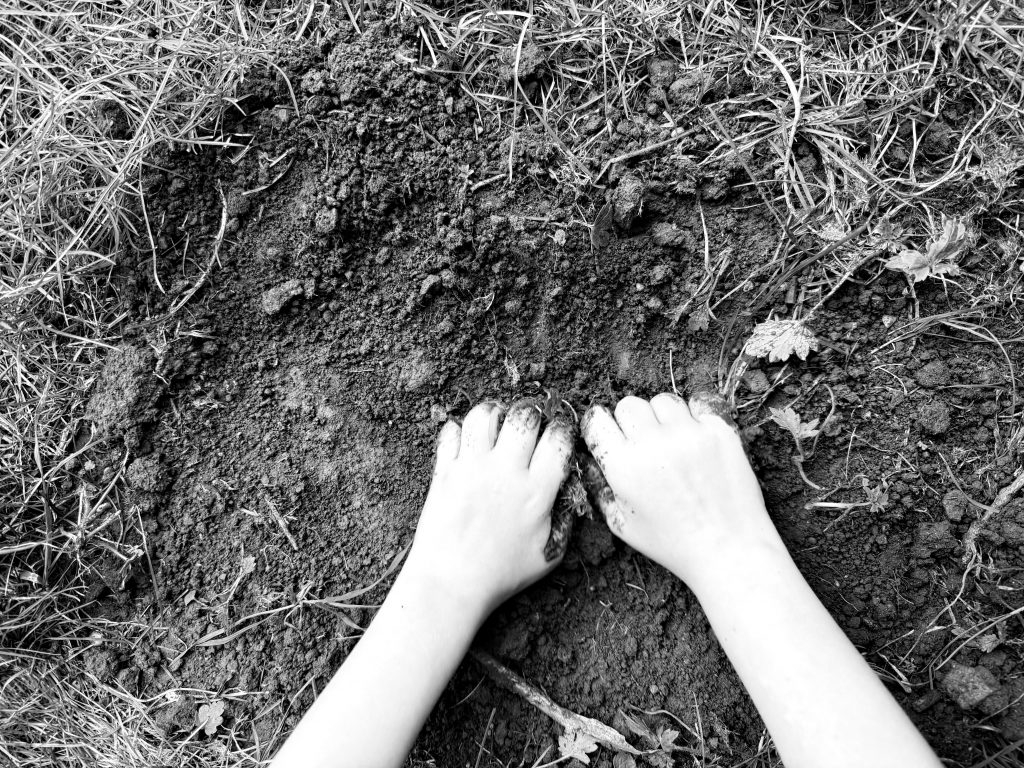
The desire to play, imagine, build and explore still exists. What has perhaps changed is our opportunity to do so freely.
The stories also revealed something else: care. The previous residents cared for Pond Cottage simply by living there. Fay and Ray have cared for it through restoration, inviting their own children into that process so that the landscape has become a place of shared memory across generations. Stewardship, I realised, is not about ownership or control. It is about relationship.
That understanding shaped the workshops themselves.
Before introducing ideas about river restoration, I wanted the children to experience the river through their own bodies. Drawing on one of the Forth Rivers Trust’s educational resources, I learned about the different ways rivers move: riffles, runs, glides and still water, each creating habitats for different species. Rather than beginning with explanation, we began with movement.
Using ribbons, the children embodied these different flows, discovering rhythm through their own movements and gradually becoming attuned to one another and to me. As a trauma-informed practitioner, I have learned that before we can think together, we often need to move together. Regulation, connection and curiosity emerge through shared experience.
Only then did we begin constructing rivers.
Using drainpipes and loose materials, the children designed river systems, experimenting with bends, banks and natural interventions that might slow water, reduce erosion or create habitats for wildlife. It became a shared act of discovery. Much of the language of river restoration was new to me too, and there was something wonderfully honest about learning alongside the children.
Finding a Shared Language
Perhaps the most significant learning of these first weeks has been recognising that the catchment is understood through many different languages.
Farmers read the landscape through generations of working the land. Ecologists describe it through habitats, species and hydrological processes. Local communities speak about favourite walks, childhood memories or places where they find peace. Children begin with play and curiosity.
None of these perspectives are wrong, yet they do not always meet.
I have begun to wonder whether some of the tensions that exist around land use, access and environmental change arise not from disagreement, but from the absence of shared experiences and shared language.
Perhaps this is the role that creativity plays here.
Not by persuading people towards a single way of seeing the catchment, but by creating opportunities for different ways of knowing to sit alongside one another. Art can create spaces where scientific knowledge, lived experience, memory, play and practical wisdom are all equally welcome.
Looking Ahead
These first months have left me with far more questions than answers, and that is where an artist should be.
I have come to understand that a catchment as a lived landscape made up of many different relationships. It is experienced differently by farmers, ecologists, children, landowners, walkers, visitors. Each perspective is shaped by its own knowledge, memories and responsibilities. None are complete in isolation, yet together they begin to reveal the richness and complexity of the catchment itself.
As the residency moves into its next phase, my role feels less about interpreting the landscape for people and more about creating opportunities for those different ways of knowing to meet. Over the coming months I will be working with secondary school pupils to create Photovoice essays, using photography as a way of documenting their everyday relationship with the catchment. Rather than asking young people to learn about rivers in the abstract, the workshops will invite them to notice, record and reflect on the places that
already shape their daily lives, translating lived experience into visual stories.
Alongside this, I will be bringing together older and younger generations through storytelling and shared making, drawing on the memories uncovered at Pond Cottage. If the oral histories reminded us that childhood has always been rooted in curiosity, imagination and muddy hands, then perhaps something as simple as making mud pies together can become more than play.
Running through all of this will be the planning of an autumn Catchment Festival. Rather than presenting conclusions, I hope the festival becomes another stage in the research itself: a place where artists, communities, farmers, ecologists, schools and local organisations can contribute their own perspectives, challenge one another’s assumptions and discover new points of connection.
If this first chapter of the residency has been about learning to see the catchment differently, the next feels like an invitation to see it together. I know that creativity cannot solve the environmental challenges facing our rivers on its own, but it can create the conditions for conversation, empathy and shared understanding.
Author: Laura Frood
Laura Frood is a creative practitioner and photographer operating in Central Scotland – to learn more about her work, visit her webpage or follow her on LinkedIn