Learning to Read the Land: Jude’s Reflections on a Tracking Course
Jude, 17, was supported by the Leven Catchment Collective to take part in the 3 day animal tracking course this August with the Wilderness Folk School (www.folkschool.uk).
By Jude
When I heard I was going on the course, I thought “that seems like a lot of fun! And I could learn something.” I spend a lot of my time outdoors, looking at animals and listening to them. At home, we’re changing our plot of land into something that’s a lot more interesting by boosting biodiversity. I have a lot more opportunities to do my own projects here because we have more space than when we lived in the city. I’ve been digging a hole to see what’s there and have discovered that if you take away the grass, lots of pioneer plants spring up and make it more diverse. We do a biodiversity survey every year on our land but can only record what we notice and so this course would help us find signs of animals visiting and living here but that we might not have seen.
There were lots I remember from the course like setting up camp in the woods and the bird sit spot. For that, we went off as a group then split up along a path. We wrote down what the birds sound like, even if we didn’t know their names. I went up the hill and sat on an oak tree covered in moss. I listened to all the bird sounds and it was quite peaceful. I heard many different kinds although I didn’t know many names but when we reconvened at the camp we all peer reviewed what we’d heard and helped each other with the names of the birds. We then made a map of what we had heard. I enjoy making maps so that was interesting to me.
Steven, the teacher, showed us skulls of a lot of animals and shared a big board showing footprints of all different kinds of animals, from tiny shrews to horses. Sometimes you’ll see toe and claw prints but how clear you can see it can depend on the substrate. We learned that animals, a long time ago, started off with the same number of toes but in some animals, the first toe has evolved and migrated to different parts of the foot like up the leg or straight behind it. Some toes have disappeared altogether. For example, the horse’s foot is actually its middle finger so if he holds his hoof up to you, you should be very offended!
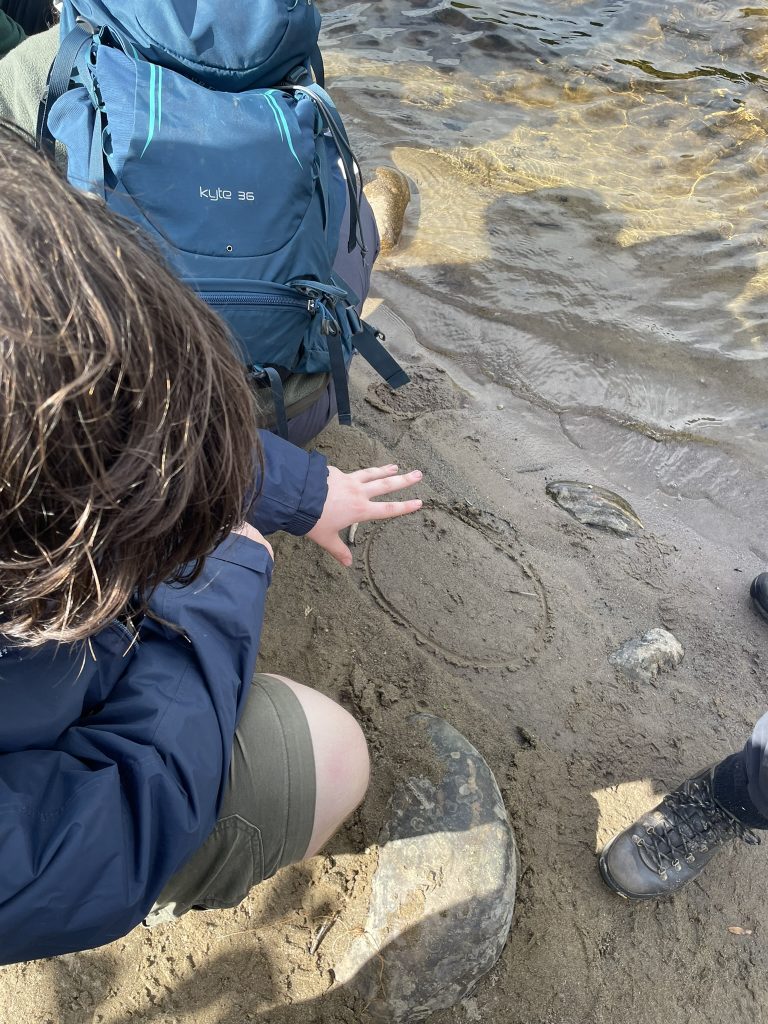
By the last day, I could identify signs a beaver had been in the area and that bird tracks on a riverside belonged to a corvid bird, most likely a crow. The soft substrate made it difficult to be sure.
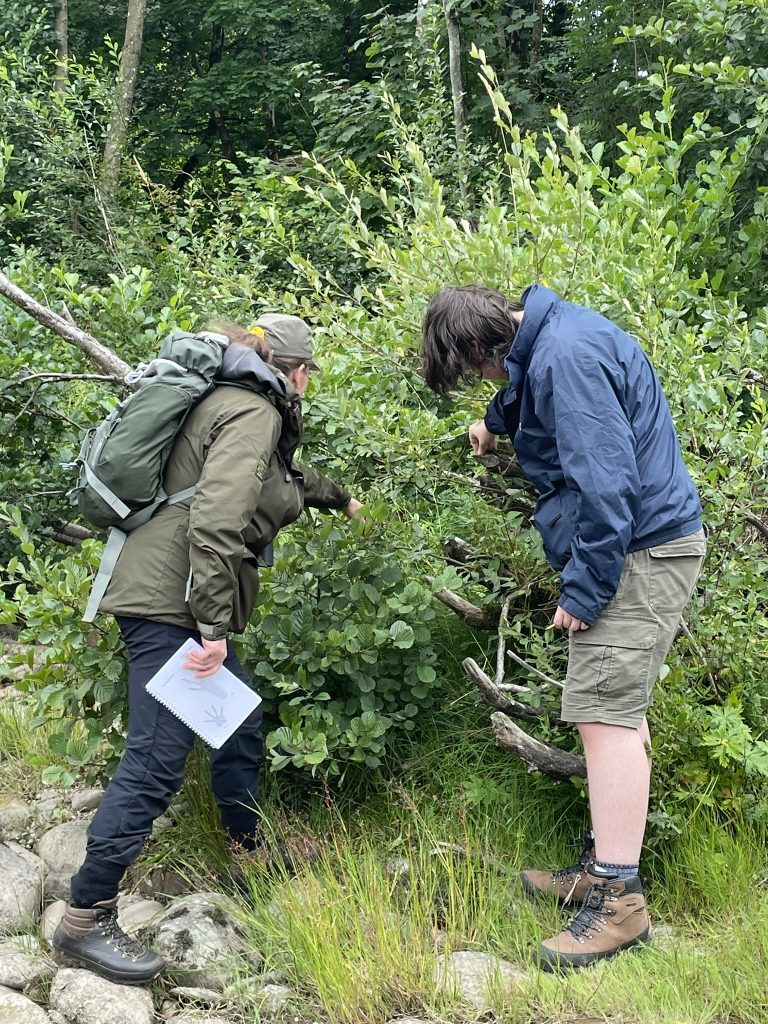
I think the course will help me find the different signs of animals that visit or stay on our land. We have a lot of hares here but I now know that hares don’t burrow or latrine but poo as they run. Finding out what animals frequent the area also helps us figure out how to protect the food we are growing. We also solved a mystery that we have been debating since last summer when something destroyed a hive of ground-nesting bees. Due to what we learned, we are now pretty sure a badger comes through our land hunting for food.
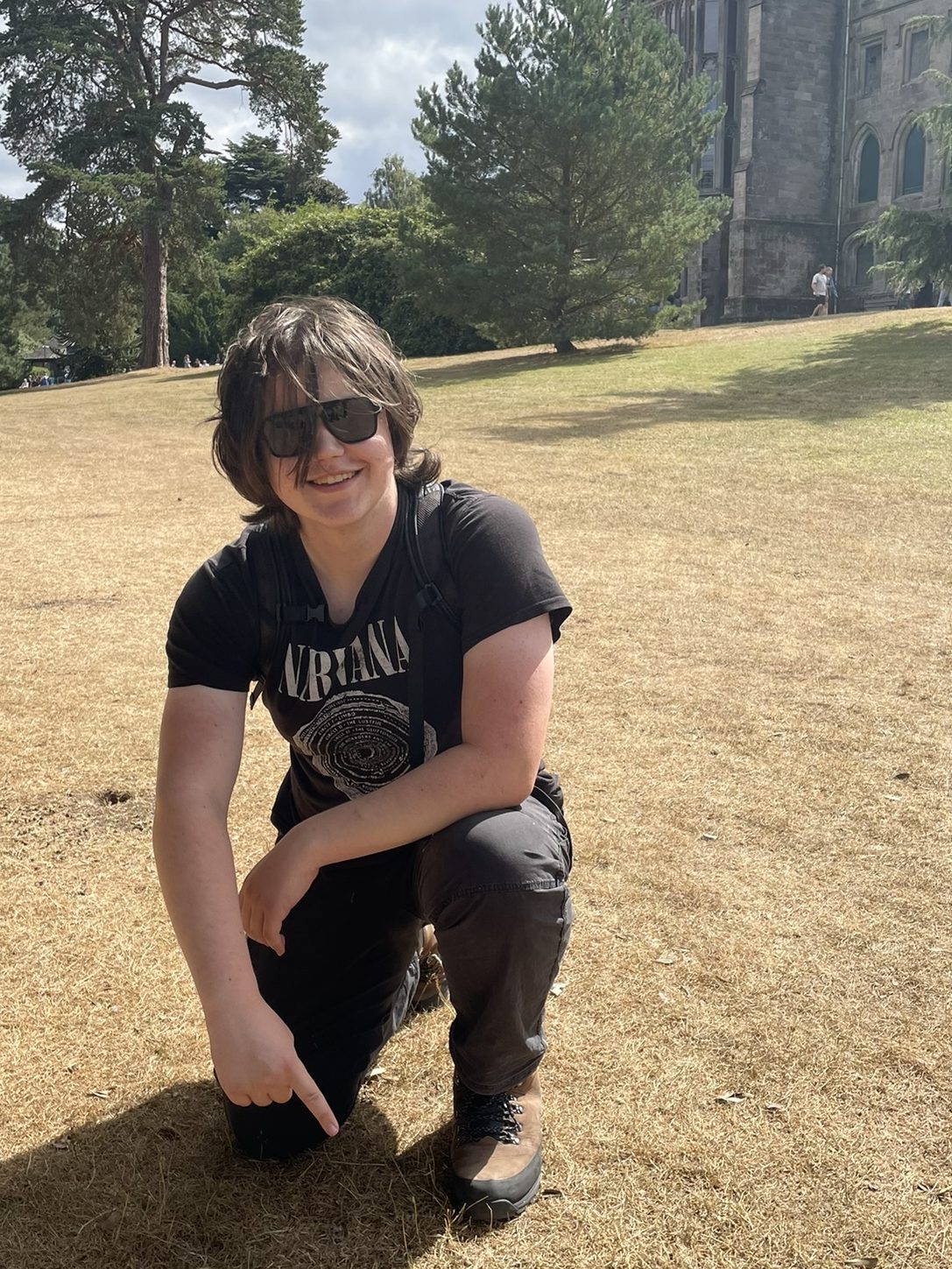
I also used what I had learned in an unexpected place. When we were down at Alton Towers recently, we found signs of rabbit in front of the big house. We had learned not to assume our first guess is right so looked around for more clues in the area to differentiate the animal from others. We found holes dug out from the grass, scat and then found a latrine spot that was being frequently used. Then we were pretty convinced rabbits live among the rollercoasters.
The course has helped me think of a lot of different questions about tracking and what lives on the land with us. For instance, I’m now wondering what dragonfly poop looks like because I’ve only just found dragonflies nearby in an area that has evolved recently from a muddly puddle to a pretty vibrant, bustling pond.
If you want to learn more about the grants we have available for attending courses, events, and project development, then head over to our community nature grants wepbage.